
The True Cost of Manual Picking (And How Automation Changes the Numbers)
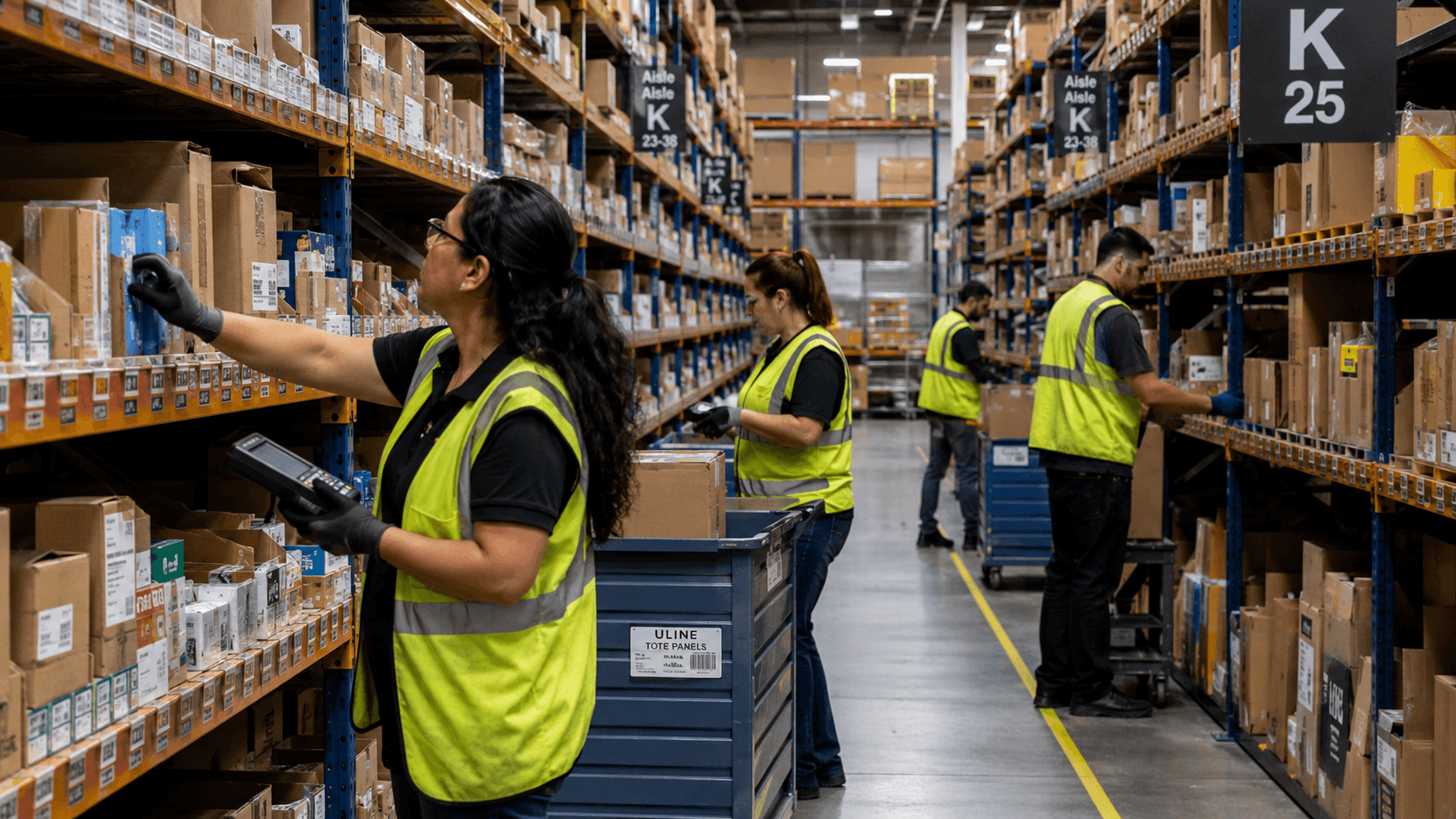
The True Cost of Manual Picking
When businesses evaluate warehouse automation, they often compare the capital cost of the automation system against the direct wage cost of the people it would replace. This comparison almost always undersells the ROI of automation — because the true cost of manual picking is significantly higher than the direct wage bill.
This article breaks down the full cost of manual warehouse operations and models what automation does to those numbers.
---
Component 1: Direct Labour Cost
This is the number most people start with — and it's real, but it's only the beginning.
In South Africa, a warehouse picker earns an average of R6,000–R10,000 per month in basic wages (depending on region and sector), plus statutory benefits. For a 50-person picking team running two shifts:
- 50 pickers × R8,000 average wage = R400,000/month in direct wages
- Employer contributions (UIF, SDL, pension fund): approximately 12–15% additional = R460,000–R480,000/month
- Annualised: approximately R5.5M–R5.8M/year
---
Component 2: Recruitment and Training
Warehouse picker turnover in South Africa averages 25–40% annually. For a 50-person team, that means replacing 12–20 pickers per year.
Each replacement involves:
- Recruitment advertising or agency fees: R2,000–R5,000 per hire
- Interview and onboarding administration: 4–8 hours of supervisor time
- Training time to competence: 2–4 weeks at reduced productivity
- Experienced peer time for on-the-job training: 5–10 hours
---
Component 3: Picking Errors
Manual picking accuracy in a well-run warehouse typically runs at 97–99%. That sounds excellent — but at scale, the numbers are significant.
For a high-volume operation processing 5,000 orders per day (the scale used in this worked example):
- At 98% accuracy: 100 incorrect orders per day
- Each incorrect order requires: customer service handling, return collection, replacement dispatch
- Conservative cost per error: R150–R400 (depending on product value and delivery cost)
- Annual error cost at 100 errors/day × R250 average: R9.1M/year
This is a figure that frequently surprises businesses when they calculate it for the first time. Automated systems with WMS enforcement routinely achieve 99.8–99.9% accuracy, reducing this cost by 80–90% regardless of scale.
---
Component 4: Physical Walking Time
In a manual walk-and-pick warehouse, a picker spends 60–70% of their shift walking between locations. For a 50-person team:
- 50 pickers × 70% travel time = 35 person-shifts of travel per shift
- These 35 shifts generate zero picks — they are pure overhead
- Annualised labour cost of non-productive travel: approximately R2M/year
---
Component 5: Overtime and Peak Labour
Most warehouses have significant peak periods — Black Friday, Christmas, month-end. Meeting peak throughput manually requires either costly overtime or temporary labour.
For an operation that runs at 2× normal volume for 6 weeks per year:
- Overtime premium for existing staff: 50% uplift on wages = R200,000–R400,000 for the peak period
- Temporary labour: recruitment, lower productivity, training, and error rates
- Total seasonal peak cost premium: R400,000–R800,000/year
---
Component 6: Workplace Injuries and Absenteeism
Warehouse picking involves repetitive movement, heavy lifting, and sustained physical activity. In South Africa, musculoskeletal injuries are a significant source of COID (Compensation for Occupational Injuries and Diseases) claims and absenteeism in the warehouse sector.
A 50-person team might experience:
- 4–8 COID-related absences per year, each averaging 2 weeks
- COID claim administration and premium impact
- Productivity loss from absenteeism
Automation eliminates the physical strain of walking and carrying — reducing injury rates and the associated costs.
---
The Full Cost Picture
Adding up all six components for the high-volume scenario modelled here (50-person team, 5,000 orders/day):
| Cost Component | Annual Estimate |
|---|---|
| Direct labour (wages + contributions) | R5,500,000 |
| Recruitment and training | R225,000 |
| Picking errors and recovery | R9,100,000 |
| Non-productive travel time | R2,000,000 |
| Peak overtime and temp labour | R600,000 |
| Injuries and absenteeism | R350,000 |
| **Total** | **R17,775,000** |
For this high-volume scenario, the direct wage cost (R5.5M) represents only 31% of the true total. At lower order volumes, the error component scales down proportionally — but the other five components remain largely fixed, meaning the wage-cost share increases. The methodology is the same across scales; only the numbers change.
---
What Automation Does to These Numbers
A goods-to-person AMR system capable of achieving the same throughput as a 50-person manual team might involve:
- 30-unit AMR fleet with 10 pick stations
- Capital cost (hardware, software, installation): R10–R15 million
- Annual operating cost (maintenance, support, software, energy): R1.2–R1.8 million
For smaller operations (10–20 AMRs, 500–1,000 orders/day), payback typically runs 2–4 years — still a strong return, and the financial model still stacks up clearly against a manual alternative. The payback period compresses with order volume because the error and travel cost components are larger relative to the capital investment.
---
A Note on These Numbers
The figures in this article are illustrative — they are designed to demonstrate the methodology and show which cost components matter most, not to serve as a benchmark for your operation.
Specifically:
- Wage rates are general market estimates; your actual wage bill may differ by region, sector agreement, and shift structure
- Error costs scale directly with order volume — the worked example uses 5,000 orders/day, which is a large SA operation
- Turnover rates vary significantly by location, workforce demographics, and management practice
- Payback periods depend on your actual capital cost, order volume, error rate, and labour cost structure
---
Starting the Conversation
The businesses that achieve the best returns from warehouse automation are those that go in with clear eyes about what their manual operation actually costs. The true cost is almost always significantly higher than the wage bill suggests.
If you'd like to understand what automation could return for your specific operation, Allied Automation offers a free site assessment and financial modelling exercise. Our South African automation specialists will visit your facility, review your operational data, and present a model showing your true manual operating cost and the projected return from automation.
There's no obligation to proceed — and the analysis itself is often valuable regardless of your timeline for investment. Contact us to get started.
Senior Automation Specialist — Africa
Shaun leads Allied Automation's African operations, specialising in warehouse automation solutions across South Africa and the broader African continent. He focuses on AMR fleet deployments, sortation system design, and WMS integration for distribution environments.
Ready to Automate Your Warehouse?
Book a free assessment with our South African team and find out what automation can deliver for your operation.