
Fixing the Returns Bottleneck at a Designer Fashion Brand
JNBY Group (Jiangnanbuyi), Hangzhou, China
Results at a Glance
The Challenge
JNBY Group — a well-known designer fashion group established in 1994 — faced a returns operation that was becoming its biggest operational drag. Three pain points compounded each other: returns volume was highly uneven, with violent peaks at B2B quarter-end, daily store returns and after every e-commerce promotion; the SKU mix was enormous — every returned garment needed multi-level sorting by brand, style, size, color and condition before grading for resale; and the slow inventory cycle on returns meant garments sat in the reverse-logistics warehouse for weeks, tying up working capital, blocking new seasonal flow and delaying re-listing of still-sellable inventory on the B2C site. At baseline, the operation was processing 50 pieces per hour. Without intervention, returns would continue to drag down margin gains on the outbound side.
The Solution
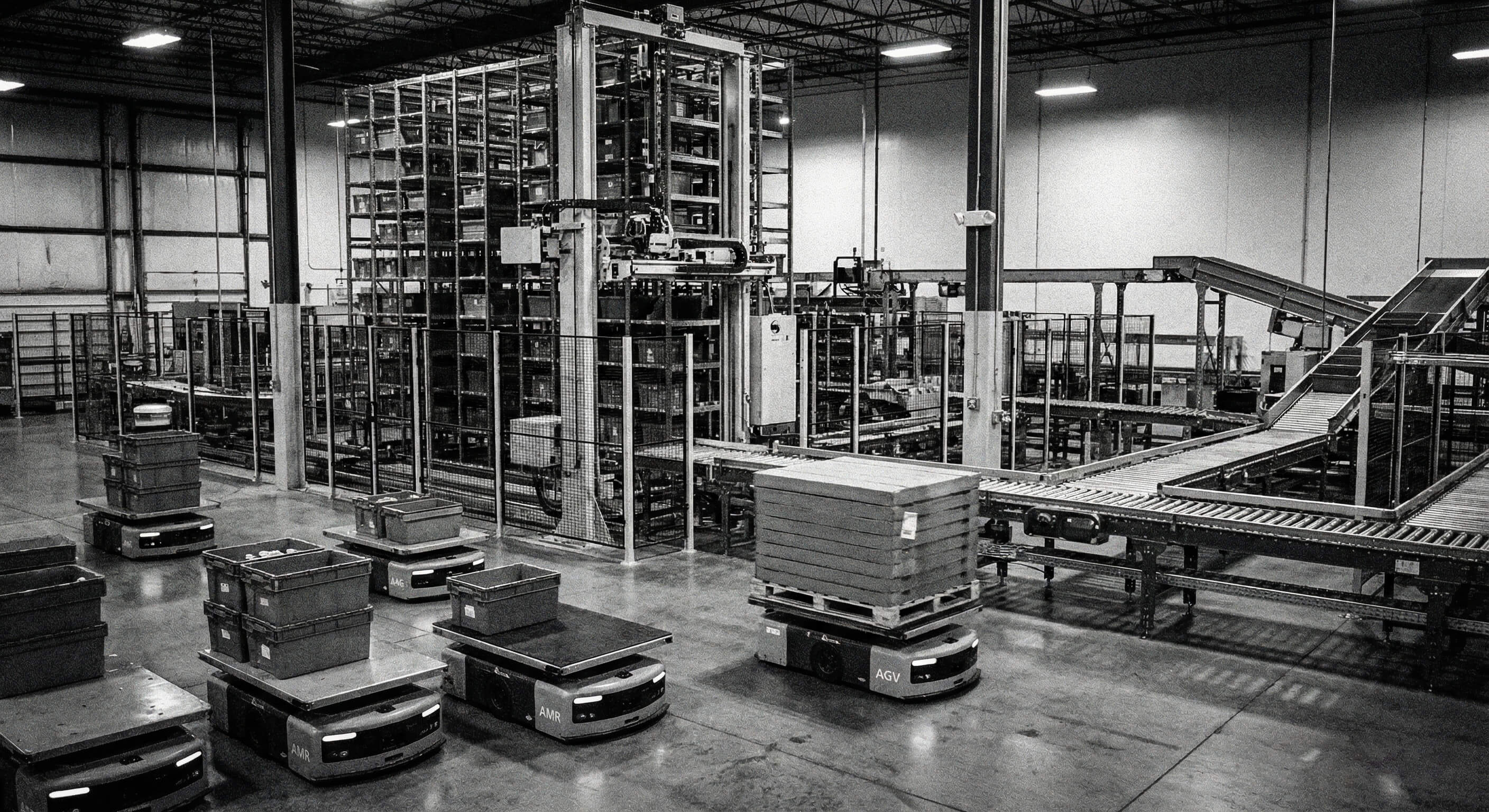
A dedicated returns warehouse was built around a fleet of long-tote Autonomous Case-handling Robots (ACR-L), paired with high-throughput loader/unloader stations. 56 ACR-L robots (long-tote variant) move totes across 2,780 mm shelving optimised for hanging and folded garments. 14 specialised workstations are split into 7 loader (inbound returns) and 7 unloader (outbound re-listing/transfer) stations — so inbound and outbound flows never interfere with each other. 19 charging stations keep the fleet running through peak-return days without degradation. Custom tote sizing (600 × 440 × 280 mm) is sized for mid-priced designer apparel, maximising storage density. The 12,400 m² active storage area provides 88,000+ storage locations — enough to hold the full range of returned designer SKUs through the longest peak.
Systems Used
- 56 ACR-L robots (long-tote variant)
- 14 split loader/unloader workstations
- 19 charging stations
- Custom totes (600×440×280 mm)
- 88,000+ storage locations in 12,400 m²
Why This Matters for South African Operations
Returns are the silent killer of fashion e-commerce margins. Return rates of 20–40% are normal, every returned garment needs graded inspection and multi-level sortation, and slow returns processing ties up working capital and blocks the next season. This project shows what "built-for-returns" automation looks like: dense long-tote storage, a robot fleet sized for peaks, and separate loader and unloader stations so inbound and outbound flows run in parallel. For any apparel brand or 3PL where return rates are eating into the bottom line, this blueprint is directly transferable.
Partner Technology Case Study
This project was delivered using automation technology from Allied Automation's manufacturing partners. Allied Automation supplies, integrates and supports the same technology platforms across South Africa and Africa. The results and specifications shown are those of the original deployment.
Related Case Studies
Ultra-High-Density 3PL Storage Inside a Low-Ceiling Building
Top-Tier 3PL Operator, Hong Kong
Storage density achieved
A New B2B + B2C Fulfilment Centre for a Premium Consumer-Electronics 3PL
Leading UK-Based 3PL (Premium Consumer Electronics Brand)
Storage locations on 41×70 m footprint
Ready to Achieve Similar Results?
Book a free assessment and let our team model what automation can deliver for your operation.