


In 2025, South Africa’s warehouse automation sector is entering a phase of acceleration. With a projected market growth from US $133 million in 2024 to over US $300 million by 2030 (CAGR ~17 %), the business case is clear. Automation is driven by surging e-commerce demands, labour cost and scarcity, and major strides in robotics and software. Key sectors such as FMCG, retail, e-commerce fulfilment and 3PL are set to lead adoption. While initial cost, infrastructure and skills issues remain, modular, scalable automation models are lowering the entry barrier. For logistics decision-makers and business owners, the time to act is now: automation is no longer a “nice to have”—it’s a competitive imperative. Partnering with a firm that understands the South African context ensures your investment becomes a growth enabler, not just a cost centre.
The moment is now
For South African logistics and warehousing, the shift is no longer “maybe someday” — it’s happening now. 2025 marks a turning point: e-commerce is surging, labour pressures mounting, and automation technologies are becoming both accessible and essential. Companies that treat warehouse automation as a strategic enabler — not just an operational cost — are already getting ahead.
Market scale & trajectory
Recent data illuminate just how fast the market is accelerating. According to Grand View Research, the South African warehouse automation market — estimated at US $133 million in 2024 — is projected to reach US $321 million by 2030, implying a CAGR of ~17 % from 2025-30. grandviewresearch.com
Simultaneously, another firm, IMARC Group, notes the 2024 baseline of US $134.6 million will burgeon to US $657.1 million by 2033 (CAGR ~17.2 %). imarcgroup.com
Globally, the warehouse automation market also keeps climbing — per Mordor Intelligence the overall market will hit ~US $29.9 billion in 2025 and US $63.4 billion by 2030 (CAGR ~16.2 %). Mordor Intelligence
In short: South Africa may be a smaller slice of the pie, but the growth rate says big game.
What’s driving this surge?
E-commerce acceleration
Online shopping in South Africa has become a non-negotiable growth vector. That means more frequent orders, shorter lead times, more SKU variety — all behaviours that manual systems strain under. In the broader African market, the warehouse automation sector is forecast to grow at ~15.4 % CAGR. apex-rts.co.za
While country-specific e-commerce stats are patchy, industry commentary notes the Gauteng region is fast becoming a massive e-commerce logistics hub — driving adoption of automation in warehouses. techsciresearch.com
Labour scarcity & cost pressures
South Africa’s warehouse labour pool is under pressure: high turnover, skills gaps, and increasing cost base. For mid-sized warehouses, the efficiency loss from manual workflows is mounting. Automation technologies like AMRs, AS/RS and WMS are filling that gap. kenresearch.com
Tech maturation & affordability
Robotics, IoT, AI — the tech stack that once seemed exotic is now increasingly modular and scalable. South African firms — and their multinationals — are leveraging this shift. For example, the uptake of IoT + big data in local warehousing is cited as a principal driver. techsciresearch.com
Also, hardware is still the largest spend category (in South Africa in 2024) according to Grand View Research, but software is the fastest growing layer. grandviewresearch.com
Sector opportunities: where the action lies
FMCG & retail distribution
The fast-moving goods sector thrives on high volumes, rapid turnover, and tight margins—ideal for automation. Seen as a prime adopter in the region, retail supply-chains are being re-engineered with automation in mind.
E-commerce fulfilment & 3PL
E-commerce demands mini-fulfilment centres, fast turnaround, multi-channel logistics. Third-party logistics providers (3PLs) and fulfilment specialists are investing in automation to stay competitive and flexible.
Manufacturing inbound/outbound hubs
Manufacturers facing global supply-chain pressure are automating their warehouses to improve throughput, accuracy and responsiveness. Particularly where South African export/growth mindset meets operational complexity.
Challenges worth calling out
-
Up-front CAPEX and skills investment: Many firms still see automation as “expensive and complex”. Reports cite large initial investment hurdles particularly for SMEs. kenresearch.com
-
Integration & change management: Automation isn’t plug-and-play. Success depends on how well software, hardware, labour and workflows align.
-
Infrastructure variability: Power reliability, logistics infrastructure, and broadband/IoT readiness vary by region in South Africa. These can slow or complicate roll-outs.
-
Skill-shortage: There’s a gap in local skills for maintaining complex automated systems — a non-trivial risk. kenresearch.com
What 2025 looks like: key trends to monitor
-
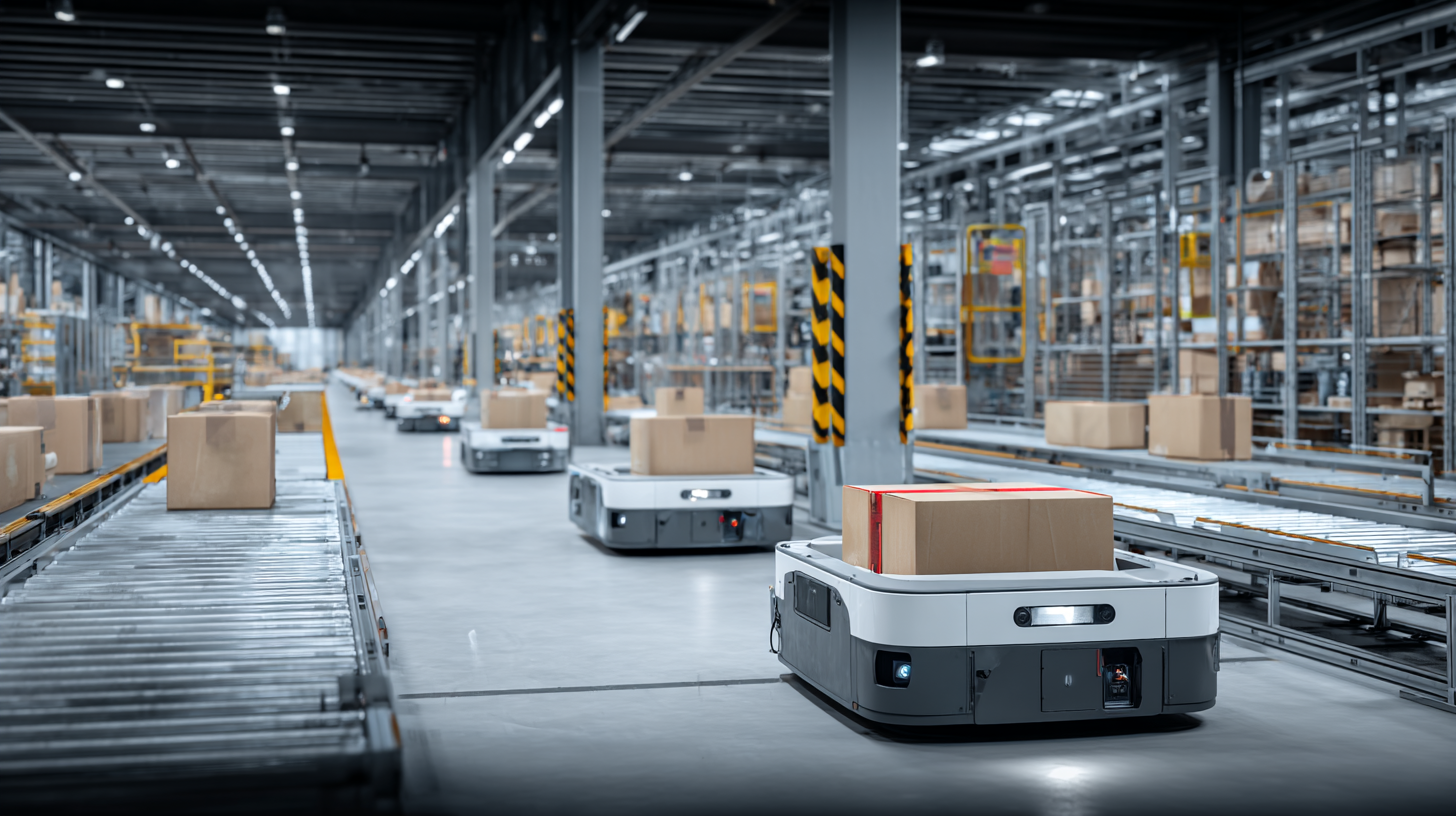
Modular automation on the rise: Rather than full-scale robot farms, many mid-sized warehouses will deploy incremental automation (WMS upgrades, AMRs, conveyor integration) that can scale.
-
Data-first operations: More players will shift from “automation = hardware” to “automation = data and optimisation”. Sensors, analytics and IoT will drive decisions more than brute force.
-
Sustainability & footprint pressure: As warehouse real estate costs rise and ESG metrics become more important, automation will be a tool not just for throughput but for energy/space efficiency.
-
Local vendor ecosystem growth: South African solutions providers (or global firms with local offices) will capture more of this market, delivering customised local-condition solutions.
-
Hybrid human-machine workflows: Instead of replacing humans, the trend is collaboration (cobots, human-robot teams). This matters in SA where labour dynamics differ from fully automated markets.
Implications for business owners & logistics decision-makers
-
If your business is reliant on manual labour for core warehousing, you’re vulnerable. Whether it’s cost, error rate, or scalability — automation gives you a lever.
-
Choose your entry point wisely: automation segment doesn’t mean “all-or-nothing”. Starting with one bottleneck (e.g., picking errors, space utilisation) can unlock meaningful ROI before scaling.
-
ROI timeframes are becoming clearer in South Africa: firms should model 3-5 year payback scenarios with realistic assumptions around labour savings, error reduction, and throughput gains.
-
Partnerships matter: The right automation vendor knows South Africa’s logistics quirks — not just the tech. Local support, service, understanding of load-shedding, staff training — these make or break projects.
-
If you wait until competitors have done it, the gap widens. Early adopters will lock in efficiency, meaning you’ll face pressure either to match or accept being behind.
Contact Allied Automation for a bespoke consultation and roadmap tailored to South African realities.
continue reading
Related Posts

Warehouse automation delivers tangible benefits for South African businesses —
South Africa’s logistics sector is evolving fast, and warehouse automation