

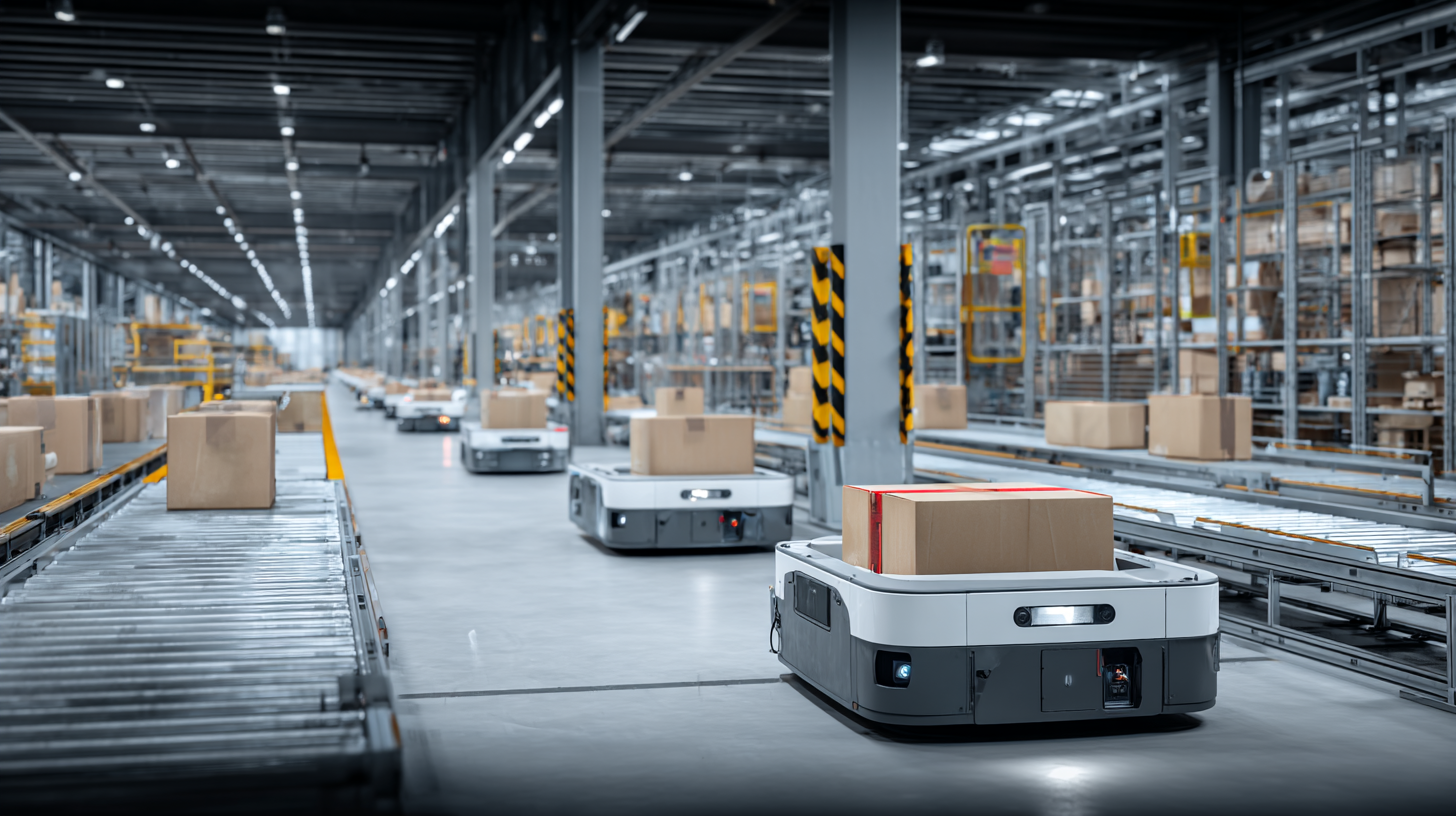
South Africa’s logistics sector is evolving fast, and warehouse automation is leading the charge. Driven by efficiency and accuracy demands, local businesses are adopting robotics, smart storage, and data-driven systems to stay competitive. The South African warehouse automation market is projected to grow from US $133 million in 2024 to US $321 million by 2030 (17 % CAGR), according to Grand View Research. For business owners, this isn’t about replacing people — it’s about building smarter, more resilient operations through modular automation that scales with growth.
1. Why Warehouse Automation Matters
Warehouse automation is no longer futuristic — it’s the here-and-now solution to South Africa’s logistics challenges.
By combining robotics, smart software, and intelligent workflows, businesses are reducing costs, cutting errors, and scaling operations faster than ever.
According to Grand View Research, the South African warehouse automation market is set to grow from US $133 million in 2024 to US $321 million by 2030 — a 17 % compound annual growth rate. In plain English: your competitors are already making the switch.
2. What Exactly Is Warehouse Automation?
Warehouse automation refers to technology that reduces manual labour while improving accuracy and throughput.
Here’s what that looks like in practice:
-
Automated Storage & Retrieval Systems (AS/RS): Shuttles, cranes, and lifts that store or retrieve inventory automatically.
-
Autonomous Mobile Robots (AMRs) and AGVs: Self-navigating vehicles that transport goods across the warehouse floor.
-
Warehouse Management Systems (WMS): Software that controls inventory, picking, and replenishment while syncing with your ERP.
-
Automated Conveying & Sorting: Belt systems and scanners that move and sort goods for dispatch.
-
Vision Systems, Sensors, and IoT: Real-time tracking, analytics, and predictive maintenance.
-
Collaborative Robots (Cobots): Machines designed to work alongside humans for speed and safety.
3. The Business Case: Why South African Companies Are Automating
Automation isn’t about shiny tech — it’s about tangible ROI.
-
Speed: Process orders faster and meet e-commerce expectations.
-
Labour Efficiency: Reduce dependency on repetitive manual tasks.
-
Space Optimisation: Use every cubic metre more effectively.
-
Data-Driven Forecasting: Gain live visibility into inventory and performance.
-
Scalability: Handle seasonal surges without extra staff.
-
Competitive Advantage: Deliver quicker, cheaper, and more accurately than rivals.
4. Local Challenges and How Automation Solves Them
- Labour shortages & rising wages: Mechanisation offsets reliance on manual staff.
- Load-shedding & infrastructure issues: Modular systems with low-energy modes stay operational.
- Long-distance logistics: WMS and IoT create real-time visibility across the network.
- E-commerce demand spikes: AMRs and automated sorters enable 24/7 scalability.
According to TechSci Research, demand for automation is surging in South Africa’s e-commerce and retail distribution sectors — particularly in Johannesburg, Cape Town, and Durban.
5. Levels of Automation (and Where You Might Fit)
- Semi-Automated: Software-driven inventory, manual picking, conveyors assist movement.
- Mechanised: Conveyors, sorters, and AGVs handle high-volume workflows.
- Fully Automated: Robotic picking, AS/RS storage, minimal human touch points.
For most mid-size South African warehouses, mechanised automation offers the best balance between performance and affordability.
6. Building Your Automation Roadmap
Step 1: Audit Current Operations
Measure order throughput, error rates, labour costs, and storage efficiency. Identify bottlenecks and downtime sources.
Step 2: Define ROI Targets
Know your “why” — speed, cost, or capacity. Typical ROI periods in SA range three to five years depending on scale.
Step 3: Implement in Phases
- Start small: deploy WMS + conveyors, or introduce AMRs for repetitive routes.
- Choose vendors with modular expansion options and proven South African support.
- Invest in change management — automation succeeds when staff buy in.
7. Industry Statistics That Prove the Shift
-
Warehouse automation in South Africa: US $133 M → US $321 M (2024–2030) — CAGR 17 %. (Grand View Research)
-
Logistics automation overall: US $265 M (2023) → US $621 M (2030). (Grand View Research)
-
Global automation market: Projected to exceed US $55 billion by 2030, growing 15 % annually. (Logistics IQ)
These figures make one thing clear: automation isn’t optional — it’s inevitable.
8. Addressing Common Concerns
- “It’s too expensive.”
Automation is an investment, not an expense. Payback often arrives within 3–4 years through labour savings and accuracy gains. - “Our volume doesn’t justify it yet.”
Start modularly — automate the busiest zones and scale later. - “Technology moves too fast.”
Choose open-architecture systems with upgradable software and hardware. - “We’ll lose jobs.”
Automation shifts roles toward supervision, maintenance, and analytics — safer, higher-value work.
9. Why Partner with Allied Automation
At Allied Automation, we design, install, and maintain warehouse automation solutions built for South Africa’s logistics environment.
From WMS implementation to AGV deployment, AS/RS integration, and automated conveyor systems, we provide turnkey solutions with measurable ROI.
We don’t sell off-the-shelf robots — we engineer operational efficiency. Our local expertise, support, and partnerships ensure your automation project succeeds in the real-world conditions of the African market.
10. The Takeaway
Warehouse automation isn’t just a global trend — it’s a competitive weapon for South African businesses.
By embracing automation today, you’re not replacing people; you’re empowering them to operate smarter, safer, and more profitably.
Ready to future-proof your warehouse? Contact Allied Automation for a free consultation and see how efficiency becomes your new normal.
continue reading
Related Posts

Warehouse automation delivers tangible benefits for South African businesses —

In 2025, South Africa’s warehouse automation sector is entering a